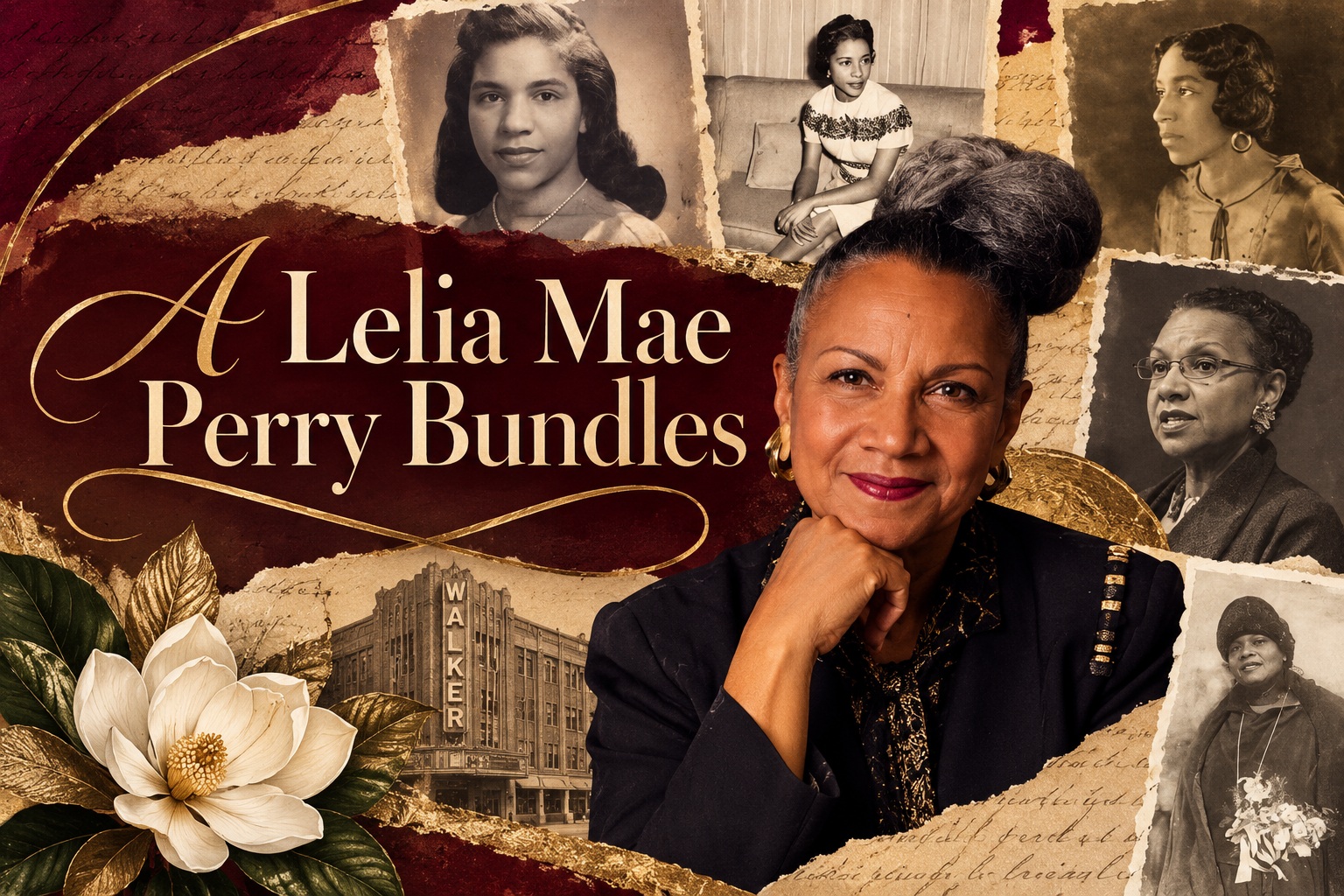
A name carried into public service
When I consider A’lelia Mae Perry Bundles, I am drawn to the work that sits between the celebrated chapters of a family history. Madam C.J. Walker built an extraordinary business. Later generations had the less theatrical task of carrying institutions forward. Bundles belonged to that continuing story, but her own life also reached into education, municipal administration, and politics.
Born on September 22, 1928, in Pine Bluff, Arkansas, she became a business executive and civic leader associated with Indianapolis. She died on January 5, 1976, at 47. Those dates frame a relatively short life with several distinct responsibilities. Calling her only an heiress leaves too much outside the frame.
Understanding the Walker family connection
Bundles was the daughter of Mae Walker Perry and Marion Rowland Perry Jr. Her mother, originally named Fairy Mae Bryant, was adopted by A’Lelia Walker. A’Lelia was the daughter of Madam C.J. Walker, whose birth name was Sarah Breedlove. Through that family relationship, Bundles was Madam Walker’s great-granddaughter.
The adoption is essential to understanding the family tree. It does not make the connection less meaningful, and it does not require a speculative explanation about anyone’s motives. Mae became part of the Walker family and later took a leadership role in its company. Family membership, business responsibility, and historical continuity met in the same household.
I find it helpful to keep the similar names separate. A’Lelia Walker was the Harlem Renaissance patron associated with an earlier generation. A’lelia Mae Perry Bundles was the businesswoman born in 1928. Her daughter, A’Lelia Perry Bundles, became the journalist and author familiar to many readers today. Their names form a thread across generations, but their accomplishments belong to different lives.
Mae Walker Perry and an inherited responsibility
Mae Walker Perry became president of the Madam C.J. Walker Manufacturing Company after A’Lelia Walker died in 1931. She remained an important figure in the company’s history until her own death in 1945. Her daughter was still a teenager when she lost her mother.
That chronology gives the idea of inheritance a human dimension. A company can pass between generations on paper, but bereavement and growing up do not follow a corporate timetable. Still, the family business was a substantial part of the world into which she matured.
Less is publicly established about Marion Rowland Perry Jr.’s professional life. His place as her father is clear; a detailed career narrative is not. Giving him an invented occupation would add apparent detail while making the family portrait less trustworthy.
Education with a practical direction
Bundles attended Howard University, studying chemistry and business. For someone connected to a hair care manufacturing company, those subjects had an unusually direct relationship. Chemistry concerns what a product contains and how it behaves. Business concerns how an organization makes, distributes, and sustains that product.
Her association with Alpha Kappa Alpha also places her within a broader community of educated Black women. I see that educational setting as an important part of her biography because it expands the picture beyond inherited status. She was preparing to work in a world where knowledge, professional relationships, and administrative ability mattered.
A university education cannot tell us everything about a person’s ambitions. It does, however, provide a firmer foundation for understanding her later responsibilities than vague claims about an effortless passage into wealth.
Marriage and family life in Indianapolis
In June 1950, she married S. Henry Bundles Jr. Their daughter, A’Lelia Perry Bundles, was born on June 7, 1952. Indianapolis became central to the family’s life, linking their home, business interests, and civic activity.
Henry worked for a period with the Walker company and later became president of Summit Laboratories, another hair care business. His involvement in Indianapolis also included civic leadership. Although husband and wife shared an industry and a city, their professional identities should remain distinct.
Their daughter’s eventual work in journalism and family history created another kind of continuity. The family story moved from manufacturing and local administration into writing, broadcasting, and historical preservation. I find that shift striking: the same inheritance could become a business responsibility for one generation and an intellectual project for the next.
Business leadership beyond a famous founder
Bundles served as vice president of the Madam C.J. Walker Manufacturing Company. That position connects her directly to the enterprise rather than simply to the founder’s reputation. Keeping an established company functioning requires attention to ordinary decisions, even when the company name carries extraordinary historical weight.
The particulars of every decision she made are not publicly established. It would therefore be excessive to credit her with specific product launches, revenue increases, or strategic transformations. Her executive role is substantial enough without invented milestones.
What interests me is the difference between founding and maintaining. A founder creates the first opening. Successors must keep the door working as circumstances change. Bundles occupied that later, necessary part of the Walker business story.
Civic work and the meaning of administration
Her service extended to the Washington Township School Board and work as a fiscal administrator for the City of Indianapolis. She was also involved in Democratic politics. These roles put education and public money alongside the responsibilities of the family company.
School boards and municipal finance offices rarely produce the mythology attached to an entrepreneurial fortune. Their decisions nevertheless touch daily life. Budgets, institutional priorities, and school governance are mechanisms through which a community functions.
I regard those civic positions as central to her identity. They show a public life with several points of contact, rather than a biography confined to the Walker name. Specific policy achievements should not be assigned to her without a clear basis, but the offices themselves demonstrate the scope of her participation.
FAQ
Was A’lelia Mae Perry Bundles the author A’Lelia Bundles?
No. She was the author’s mother. A’Lelia Perry Bundles, born in 1952, pursued journalism and wrote about the Walker family. The similarity of their names can obscure a full generation between them.
What was her connection to Madam C.J. Walker?
She was Madam Walker’s great-granddaughter through Mae Walker Perry, the adopted daughter of A’Lelia Walker. That relationship places her within the family line that continued the Walker company’s work.
Is her personal net worth known?
Her personal net worth is not publicly established. The historical value of the Walker business does not provide an accurate figure for her individual assets, income, or estate.
When did she die?
She died on January 5, 1976, aged 47, and was buried at Crown Hill Cemetery in Indianapolis. Her cause of death is not publicly established in the material available here. Medical conditions affecting relatives should not be treated as a diagnosis for her.


