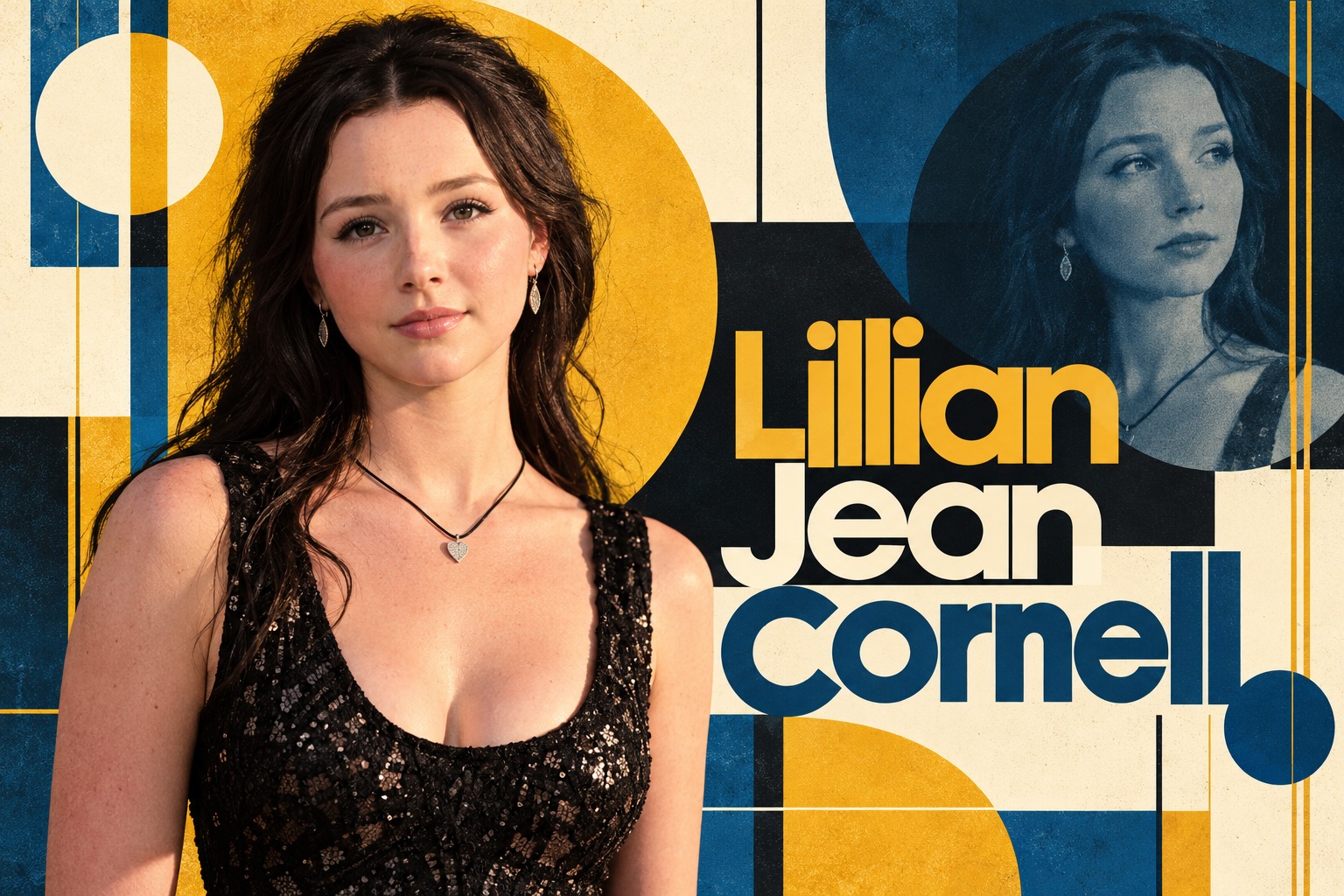
Lily Cornell Silver in Her Own Work
I find Lillian Jean Cornell’s public story most interesting in the role she chose for herself: inviting other people to speak openly about mental health. Known as Lily Cornell Silver, she launched Mind Wide Open in 2020 and developed an interview project centered on grief, trauma, and emotional experience.
She was born in June 2000 to musician Chris Cornell and music manager Susan Silver. Both parents had significant connections with Seattle’s music community, placing Lily within a creative world before her own public projects began.
The name Lily Cornell Silver joins those two family lines. Lillian Jean Cornell and Lily Cornell Silver identify the same person, rather than two different daughters. I keep the names connected because her advocacy and musical appearances are usually presented under Lily.
Her father’s fame explains much of the initial attention. Her interviewing work explains what she did with that attention. The distinction gives her biography movement beyond being introduced repeatedly as a musician’s child.
Chris Cornell and Susan Silver
Chris Cornell became known through Soundgarden, Temple of the Dog, and Audioslave. He was born in 1964 and died on May 18, 2017. Lily was still a teenager when she lost him.
Susan Silver built a career as a Seattle music manager, working with bands including Soundgarden and Alice in Chains. Her work placed her within the business and organizational side of the same musical community. She and Chris married in 1990, welcomed Lily in 2000, and divorced in 2004.
I see Susan’s career as an important correction to a one sided family portrait. Lily’s background connects not only with a singer on stage, but also with a manager whose work helped support bands and their professional lives.
The parents’ divorce is a dated family event. It does not establish every private feature of Lily’s upbringing, and it should not be used to imagine an explanation for each later creative decision. The clear facts are the marriage, their daughter, the separation, and the distinct professional roles.
Toni and Christopher
Chris’s second marriage, to Vicky Karayiannis, produced two more children: Toni Cornell in 2004 and Christopher Nicholas in 2005. They are Lily’s younger paternal half siblings.
Toni has performed publicly, including in tributes associated with her father. Christopher has maintained a more limited public profile. Their relationships with Lily connect through Chris, while Susan is Lily’s mother and Vicky is theirs.
I keep that distinction straightforward. The three children share a father, but they do not all share both parents. A family gathering or shared tribute can show connection without changing the actual family tree.
The age differences also place Lily as the oldest child. She was born before Chris’s second marriage and before her younger siblings arrived. That chronology supplies her position within the family without assigning her an invented responsibility for everyone else’s grief.
Grandparents and a Wider Seattle Circle
Lily’s paternal grandparents are Edward Boyle and Karen Cornell, Chris’s parents. Her maternal grandparents were Samuel Silver and Emmogene Jean Silver. The two family lines sit behind the surnames she uses publicly.
Her paternal uncle Peter Cornell has also pursued music and acting. Other relatives belong to Chris’s larger sibling group.
The Seattle music circle also included people close to both parents, including Jerry Cantrell and other members of Alice in Chains. Such figures can be important family friends without becoming biological uncles. I find that distinction especially useful when affectionate labels appear around a close creative community.
Mind Wide Open in 2020
Lily launched Mind Wide Open on July 20, 2020, which would have been her father’s fifty sixth birthday. The date connected the project’s beginning with remembrance while giving it a purpose extending beyond one family.
The series included musicians, public figures, and mental health professionals. It began through online video and later reached audiences as a podcast. Its focus was conversation, with room for experiences often treated as uncomfortable or difficult to discuss.
I think of the title as a door left open. Guests could enter a discussion about grief or emotional health without having to compress their experience into a polished public image. That is an editorial reading of the format, rather than a claim that Lily offered clinical treatment.
Her role was host and advocate. The presence of professionals among the guests did not make every episode a substitute for therapy, nor did a musician’s candid account become a universal explanation of mental illness. The project drew its strength from making varied experiences audible.
Interviewing Susan and Returning to Music
In July 2021, Lily recorded a closing episode with her mother, Susan. The pairing connected her public project with the person whose career and parenting formed part of her own background. It also brought a management perspective from Seattle music into the conversation.
Lily’s musical debut had come in December 2020 at the Museum of Pop Culture’s Founders Award tribute to Alice in Chains. She performed Black Gives Way to Blue with Chris DeGarmo.
I find the song choice and setting significant because they connect her with the music community around her parents while establishing an actual performance of her own. It was not simply an inherited credit. Lily stood in a public musical setting and sang.
The interview series and the performance were different activities within the same period. One placed her in the role of listener and host; the other placed her voice at the center. Together, they describe a public identity involving both advocacy and creative expression.
FAQ
Are Lillian Jean Cornell and Lily Cornell Silver the same person?
Yes. Lily Cornell Silver is the public name commonly used for Lillian Jean Cornell, Chris Cornell and Susan Silver’s daughter. Her interview project and musical performances are generally identified under Lily.
What was Mind Wide Open?
It was Lily’s interview series about mental health, grief, trauma, and related experiences. Launched in July 2020, it featured professionals, musicians, and public figures and later appeared in podcast form.
What did Lily sing at the MoPOP tribute?
She performed Alice in Chains’ Black Gives Way to Blue with Chris DeGarmo in December 2020. The appearance was identified as her public musical debut and connected her own performance with Seattle’s music community.


