The artist behind the familiar songs
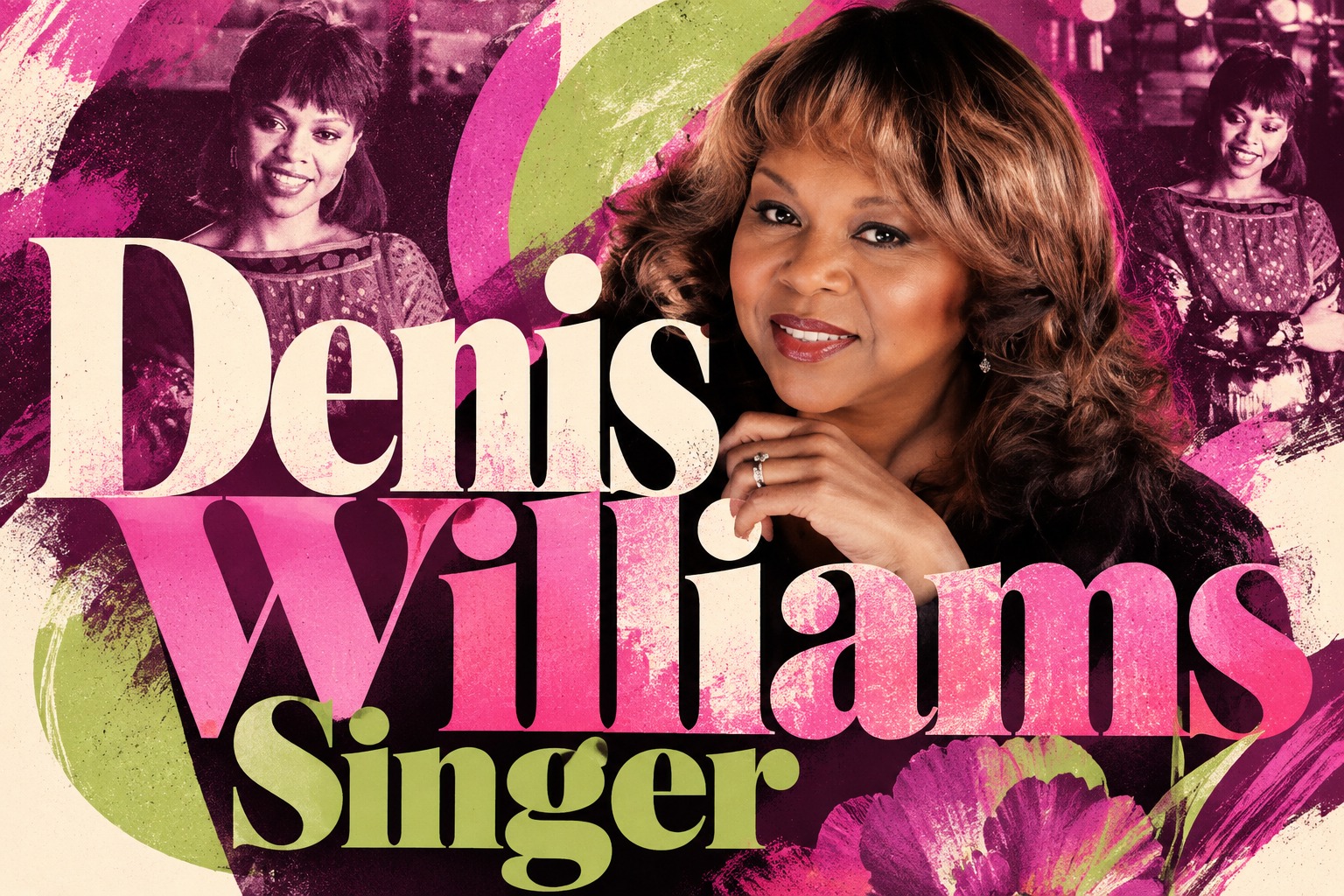
The name Denise Williams Singer points to the artist professionally known as Deniece Williams. Born June Deniece Chandler in Gary, Indiana, she became celebrated for a high, agile soprano and a repertoire that connects soul, pop, R&B, and gospel.
I hear the appeal of her career in that movement between forms. The floating intimacy of Free and the buoyant energy of Let’s Hear It for the Boy do not ask the same thing of a singer. Williams made both feel natural, using a recognizable voice without reducing every song to the same performance.
Her family life developed alongside that work. Three marriages and four sons belong to the biography, but neither motherhood nor marriage replaces the story of the musician herself.
Gary and an early connection to gospel
Williams grew up in Gary as the eldest of four children. Her father worked in security and her mother in nursing. Church and gospel music formed an early part of her musical environment.
She also admired singers whose work involved control, phrasing, and emotional precision, including Carmen McRae and Nancy Wilson. That range of influences helps explain why her later recordings cannot be contained by a single genre label.
Before making music her main profession, she attended Morgan State University and considered work in healthcare. I find that early possibility a useful reminder that a famous career was not the only imaginable path. Her eventual success can make the outcome seem inevitable, but the young woman choosing a direction did not yet possess the finished story.
Learning within Wonderlove
During the 1970s, Williams worked as a backing singer with Stevie Wonder’s Wonderlove. Singing within an ensemble requires a particular discipline: blend when the arrangement calls for it, shape a phrase precisely, and understand how one voice fits around another.
That work preceded her solo breakthrough. It placed her within a demanding musical setting and connected her with the professional world in which her own recordings would develop.
I see this chapter as more than a famous name on a résumé. Backing vocals are part of the architecture of a recording or performance. They can lift a chorus, deepen a harmony, or change the emotional color around a lead voice. Williams later brought her own lead voice to the front of that structure.
Free and the emergence of a solo identity
Her debut album, This Is Niecy, arrived in 1976. Free became its defining hit, introducing a voice capable of delicacy without losing presence.
The song’s spacious quality is part of its appeal. Williams does not need to crowd every moment. The performance can rise, hover, and settle, allowing the listener to notice both the melody and the air around it.
In 1978, she joined Johnny Mathis for Too Much, Too Little, Too Late, a number one hit in the United States. The duet gave her another setting in which to demonstrate control and interaction. Two singers must share a song without making it sound like a contest.
For me, these recordings establish the breadth of her early solo success: an individual signature on one hand, and a highly effective partnership on the other.
Pop recognition and the gospel thread
Let’s Hear It for the Boy reached number one in 1984 and became closely associated with Footloose. Its bright rhythm and celebratory lyric brought Williams to an enormous pop audience.
That success did not remove gospel from her musical life. During the 1980s, gospel became a more explicit part of her recording career, and her work in that field earned major recognition. Across her career, she won four Grammy Awards.
I would describe this as a continuing thread rather than a sudden invention of faith after pop success. Gospel had been present in her upbringing. Later recordings gave it a different professional place.
Songs such as Silly and her recording of It’s Gonna Take a Miracle also remain central to her appeal. They show a singer able to move from emotional vulnerability to polished popular music without losing the distinct shape of her voice.
Marriages and four sons
Williams married Ken Williams in 1971. Their sons are Kendrick and Kevin, born in the early 1970s. The marriage ended in 1975, before the release of her debut solo album.
Her second marriage was to Christopher Joy in 1981. That union ended in 1982. She later married producer Brad Westering in 1986, and they had two sons, Forrest and Logan. The marriage ended in the 1990s.
These dates place family changes beside major professional moments, but they do not establish why each relationship ended. Touring and recording may be demanding occupations; that general truth is not evidence of the cause of a particular divorce.
Her sons have largely maintained lives outside the center of her public profile. Their names belong in the family portrait without requiring unsupported accounts of their careers or private relationships.
FAQ
Is Denise Williams the same singer as Deniece Williams?
Yes. The professional spelling is Deniece Williams. She was born June Deniece Chandler and became known for recordings including Free, Silly, and Let’s Hear It for the Boy.
How many children does she have?
She has four sons: Kendrick, Kevin, Forrest, and Logan. Kendrick and Kevin are from her marriage to Ken Williams; Forrest and Logan are from her marriage to Brad Westering.
Did she sing with Stevie Wonder?
Yes. She worked with his Wonderlove ensemble before establishing her solo career. That period was an important professional chapter before This Is Niecy appeared in 1976.
How many Grammy Awards has she won?
She has won four Grammy Awards. Her recognition includes gospel work, reflecting a career that extends beyond the pop singles for which many listeners first knew her.
What is known about her personal wealth?
Her complete assets and liabilities are not publicly established. A long recording career can involve royalties, performances, and other income, but those activities alone do not support a precise personal net worth.